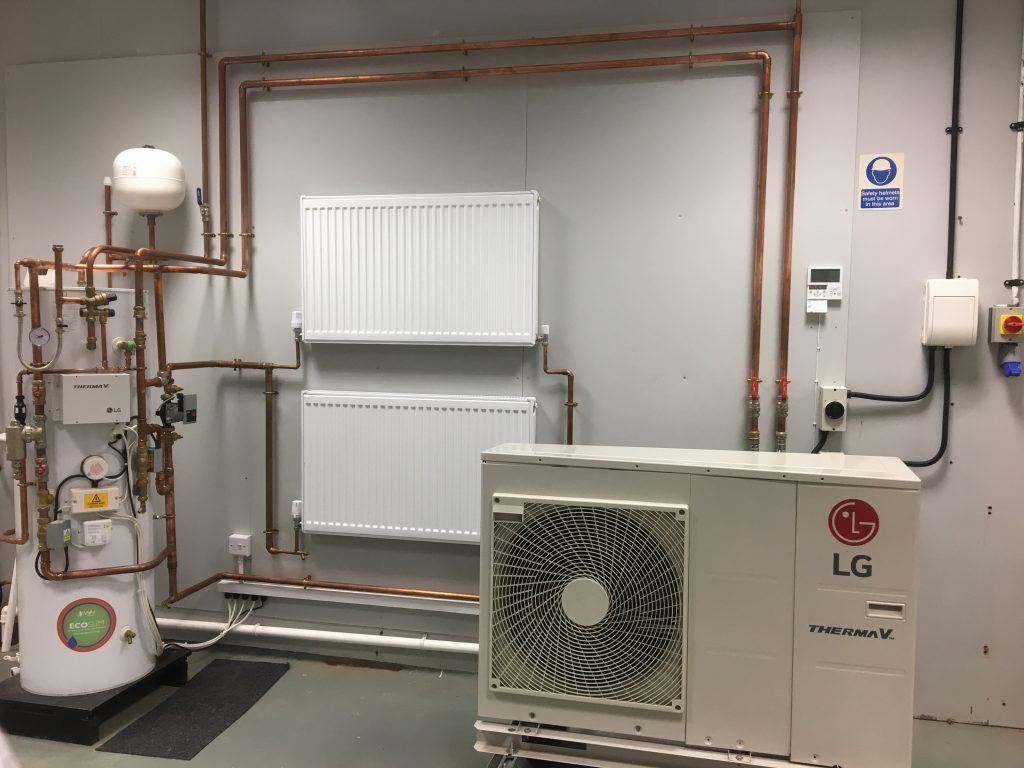
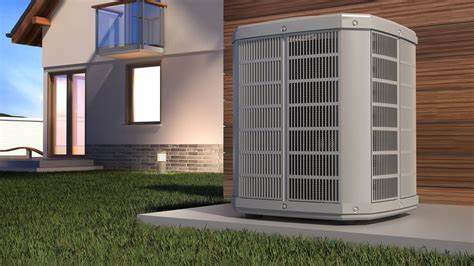
How do heat pumps work?
Although there are a few different kinds of heat pumps, they generally work in the same way.
It all starts with thermal energy (heat) that’s naturally in the air and ground. Even when it feels cold, there’s still plenty of heat there that can be used.
Heat pumps take this heat and raise its temperature before transferring the heat to your central heating system. This is a four-step process:
- A liquid chemical (similar to what your fridge uses) takes heat from the air or ground.
- The liquid turns into a hot gas through compression.
- The hot gas releases its heat to your central heating, warming your home.
- The gas cools down, turning it back into a liquid, ready to start all over again.
This is known as a refrigeration cycle. In fact, you may hear that a heat pump works just like a refrigerator in reverse. That’s because it uses the same cycle but in the opposite direction. This heat pump diagram illustrates the process:

Do I need planning permission to install a heat pump?
In general, no – you shouldn’t need planning permission to install a heat pump. This is because most heat pump installations are a ‘permitted development’.
But there are exceptions. For example, if you live in a listed building or a conservation area. It’s best to check with your local planning department before committing to installing a heat pump.
Find out more about planning permission to install low carbon technologies.
Your installer should also help with informing your local district network operator (DNO) that you’re planning to install a heat pump. The DNO is the company responsible for bringing electricity from the network to your home.
Your heat pump installer will have all the information you need to complete the relevant forms and will often do this for you.
To find out more about registering a heat pump in England, Scotland and Wales, visit the UK Government website.







Just wanted to say a big thank you for a great work on our new Boiler. We love it soo much thank you very much..

What can I say ? beautiful design and a great price and delivery, thanks.
Great work and we really appreciated all your help and advice throughout the process.

Great price, Great service, Would defiantly recombine the services for the quality of craftsmanship carried out.